Selected Speaking Engagements
2023
The United States’ Role in Combating Global Food Insecurity
(Findings from SOFI and SOFA 2023 at CSIS)
Agri-food systems provide us with many benefits, but they also exact colossal environmental, social and health costs due to failures of market, institutions and policy. This year’s State of Food and Agriculture (SOFA) report shows that agri-food systems generate about $10.8 trillion of hidden costs, amounting to 10 percent of global GDP. The aim of the report is not to raise prices by accounting for the hidden costs, but rather use policies to minimize them. Only by addressing these externalities is it possible to have good food for today and tomorrow.
November 14, 2023
The Economic Case for Cutting Food Loss and Waste
(USAID’s Kitchen Sink Podcast)
From efficient use of resources and increased food availability to smaller environmental impact, food loss and waste reduction can bring significant benefits. For example, evidence shows that policy to reduce food loss can boost availability of high-value commodities like fruits and vegetables, essential for healthy diets, with less negative tradeoffs than other policies.
Urbanization, Agri-Food Systems Transformation and Healthy Diets Across the Rural–Urban Continuum
(UN Press Conference; Interview with the Chief Economist; Key Messages)
Urbanization is a major global trend that must be factored into efforts to end hunger and malnutrition. It represents both challenges and opportunities to boost variety of nutritious foods for all. Policies must target across the rural-urban continuum, reflecting the growing connectivity and interlinkages across urban, peri-urban and rural areas, and its interaction with agri-food systems.
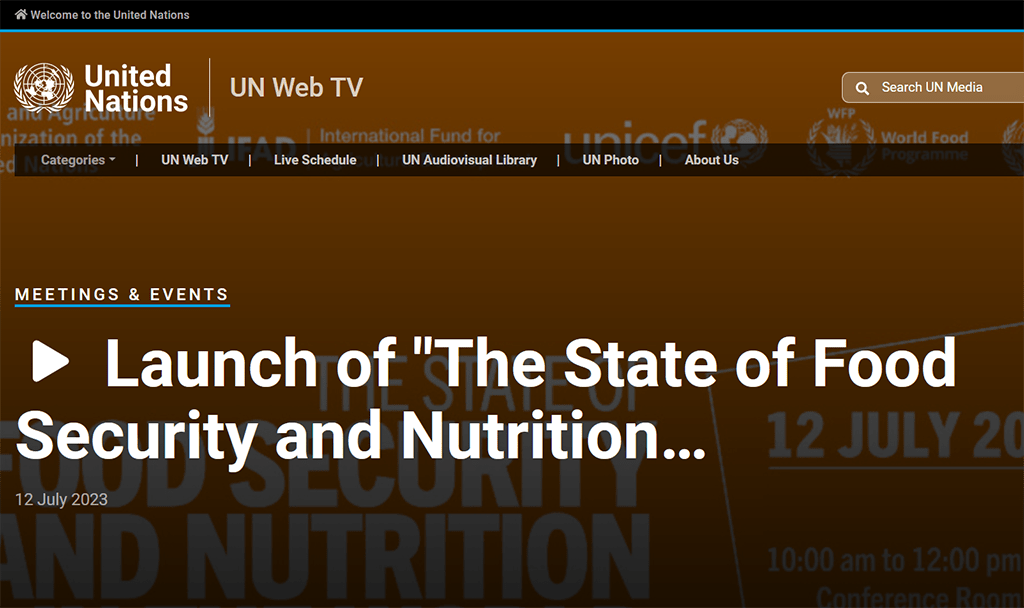
New York, July 12, 2023
Food Loss and Waste in Vegetable and Fruit Supply Chains
(International Food Policy Research Institute Seminar)
Food loss and waste reduction is a game changer for our agri-food systems. It increases access to healthy diets, makes efficient use of our natural resources, and reduces impacts on the environment with minimal tradeoffs.
March 14, 2023
High-Level Closing: Private Sector Stream of LDC5
(5th UN Conference on Least Developed Countries, Doha, Qatar)
Agriculture, a key sector for LDCs, is not just about production. It’s a system interlinked with other sectors, like energy and nutrition, and is highly vulnerable to risks and uncertainties. To transform agri-food systems and make them resilient and sustainable, it’s essential to integrate the private and public sectors through partnerships, data and innovation, and responsible investment, while empowering women and youth.

March 7, 2023
Rome Call for AI Ethics
(Renaissance Foundation Event, Vatican City)
AI is one of the key tools to combat hunger, especially as it can empower farmers to prepare against shocks. AI is also essential in building digital capacity of women and young people in rural areas to ensure the transformation of agri-food systems is inclusive. FAO is one of the first signatories of the Rome Call for AI Ethics created in 2020.
January 10, 2023
 Maximo Torero