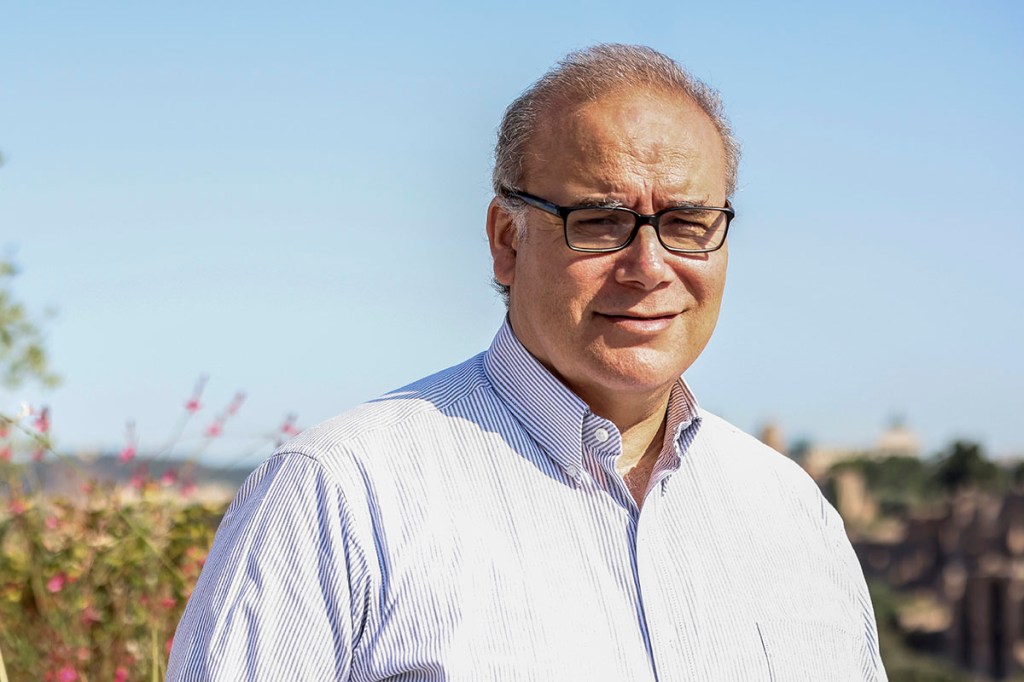
(Photo by FAO/Alessandra Benedetti)

Torero is currently the chief economist of the Food and Agriculture Organization of the United Nations based in Rome, Italy.

As the UN food agency’s top economic expert, Torero works with governments and partners to build resilient, inclusive, and sustainable agri-food systems. He focuses on strengthening shock resilience, advancing innovative financing mechanisms, improving access to healthy diets, and reinforcing supply chains. His work is grounded in decades of research on commodity prices, market volatility, and their impact on poverty and hunger. Torero leads FAO’s economic policy engagement in global processes related to the Sustainable Development Goals, particularly Zero Hunger, and serves as the organization’s analytical voice at high-level forums, shaping global dialogue on agri-food systems transformation. He co-led the UN’s global food security crisis response linked to the war in Ukraine, including the Black Sea Grain Initiative. He also provides intellectual leadership for FAO’s flagship public goods, including The State of Food Security and Nutrition in the World.

Before joining FAO in 2019, Torero served as executive director at the World Bank Group in Washington, D.C., representing Argentina, Bolivia, Chile, Paraguay, Peru, and Uruguay. From 2006 to 2016, he led the Markets, Trade and Institutions Division at the International Food Policy Research Institute, also in Washington. He led several major research and impact evaluation initiatives, including the evaluation of the Millennium Challenge Corporation’s $450 million investment in El Salvador’s Northern Transnational Highway and rural electrification programs.

Torero has published more than 40 peer-reviewed articles in top academic journals, focusing on poverty, inequality, and behavioral economics. His research has examined the impact of infrastructure, institutions, and technology on poverty reduction, and the role of geography, asset access, and market connectivity in shaping economic outcomes. He has authored or co-authored 14 books, including Food Price Volatility and its Implications for Food Security and Policy. He is currently on leave from the University of the Pacific in Peru, where he is a professor, and is an Alexander von Humboldt Fellow at the University of Bonn, Germany.

Torero has received multiple honors, including the Chevalier dans l’Ordre du Mérite Agricole from the French government and two awards from the Global Development Network for outstanding development research. His work has been cited by The Washington Post, CNN, BBC, The Economist, and The New York Times. He has written op-eds for outlets such as Foreign Policy, Project Syndicate, and Los Angeles Times.

He holds a Ph.D. in economics from the University of California, Los Angeles, and a B.A. from the University of the Pacific in Peru.

Download CV

Our Economist

Close
A prolific researcher, Torero has published scores of articles in top academic journals analyzing poverty, inequality and behavioral economics. At the country level, he has led multiple research and evaluation programs to enhance the role of infrastructure, institutions and technology in reducing poverty and inequality. Scroll down to learn more.

About

(Photo by FAO/Alessandra Benedetti)

Torero is currently the chief economist of the Food and Agriculture Organization of the United Nations based in Rome, Italy.

As the UN food agency’s top economic expert, Torero works with governments and partners to build resilient, inclusive, and sustainable agri-food systems. He focuses on strengthening shock resilience, advancing innovative financing mechanisms, improving access to healthy diets, and reinforcing supply chains. His work is grounded in decades of research on commodity prices, market volatility, and their impact on poverty and hunger. Torero leads FAO’s economic policy engagement in global processes related to the Sustainable Development Goals, particularly Zero Hunger, and serves as the organization’s analytical voice at high-level forums, shaping global dialogue on agri-food systems transformation. He co-led the UN’s global food security crisis response linked to the war in Ukraine, including the Black Sea Grain Initiative. He also provides intellectual leadership for FAO’s flagship public goods, including The State of Food Security and Nutrition in the World.

Before joining FAO in 2019, Torero served as executive director at the World Bank Group in Washington, D.C., representing Argentina, Bolivia, Chile, Paraguay, Peru, and Uruguay. From 2006 to 2016, he led the Markets, Trade and Institutions Division at the International Food Policy Research Institute, also in Washington. He led several major research and impact evaluation initiatives, including the evaluation of the Millennium Challenge Corporation’s $450 million investment in El Salvador’s Northern Transnational Highway and rural electrification programs.

Torero has published more than 40 peer-reviewed articles in top academic journals, focusing on poverty, inequality, and behavioral economics. His research has examined the impact of infrastructure, institutions, and technology on poverty reduction, and the role of geography, asset access, and market connectivity in shaping economic outcomes. He has authored or co-authored 14 books, including Food Price Volatility and its Implications for Food Security and Policy. He is currently on leave from the University of the Pacific in Peru, where he is a professor, and is an Alexander von Humboldt Fellow at the University of Bonn, Germany.

Torero has received multiple honors, including the Chevalier dans l’Ordre du Mérite Agricole from the French government and two awards from the Global Development Network for outstanding development research. His work has been cited by The Washington Post, CNN, BBC, The Economist, and The New York Times. He has written op-eds for outlets such as Foreign Policy, Project Syndicate, and Los Angeles Times.

He holds a Ph.D. in economics from the University of California, Los Angeles, and a B.A. from the University of the Pacific in Peru.

Download CV

Applied Research and Evaluation Programs

Torero’s work on applied research projects spans Latin America and the Caribbean, Africa (specifically, sub-Saharan Africa) and Asia in six areas: poverty alleviation, infrastructure, human capital, food systems, institutions, risks and uncertainties. He has a unique expertise on impact evaluation on initiatives linked to infrastructure, water and sanitation, electricity, information and communications technology, and public services delivery.

Reinforce Success, Don’t Risk a Hunger Setback

Global food prices are easing, but vulnerability persists. Incomes continue to lag behind inflation, and looming trade barriers risk making the situation worse. A major food crisis was averted during the pandemic because countries made smart choices — keeping trade open, supply chains functioning, providing targeted aid, and making policy decisions based on data. 

Still, hunger has deepened in regions like sub-Saharan Africa, where even small price increases can push families into crisis. Lessons from the 2007–2008 crisis show that protectionism only drives food prices higher. To reduce volatility and build long-term stability, countries must strengthen global cooperation and invest in their agri-food systems. Now is the time to reinforce what worked, not retreat from it.

Torero’s policy recommendations to mitigate food security threats and build resilience of the global agri-food system can be found in his writings and interviews.