At climate conference COP30 in Brazil, 43 countries and the European Union linked climate action to hunger eradication, food access, and social protection. This is a monumental shift placing the most vulnerable people at the center of global climate policy for the first time.
The Belém Declaration marks a turning point: Social protection is no longer just a stopgap for climate shocks. And it must be at the center of any strategy to reduce global hunger.
This pledge highlights the vulnerability of populations who depend on natural resources for their livelihoods and who are the first to absorb the shocks of crop failures, price volatility, drought losses, land degradation, and displacement. It offers a foundation for helping rural households transition to livelihoods that can withstand long-term climate shifts.
As climate change reshapes agricultural livelihoods, it is driving poverty and hunger. This is especially true for the 80% of the world’s lowest-income people who live in rural areas.
The modest recent gains the world made in reducing hunger hides stark inequalities across regions and populations. Food insecurity remains higher in rural areas than in cities. When rural households are desperate, they make short-term decisions that accelerate environmental damage — such as clearing forests and exhausting soils and water — to survive.
Indigenous peoples, though less than 10% of the global population, account for 19% of the extreme poor. Women continue to face barriers in accessing land, credit, and markets. Meanwhile, floods and droughts are destroying crops and livestock. Shifting rainfall and rising temperatures are cutting yields and incomes.
The challenge is to reduce hunger and poverty without compromising the environment. Conversely, protecting nature must not come at the expense of people whose livelihoods depend on it.
Across the world, social protection programs — policies designed to shield people from poverty and vulnerability — are supporting households manage climate shocks and adapt their livelihoods. In Kenya, government-led cash transfers have enabled highly vulnerable households to access food and economic resources between 2009 and 2017 without resorting to environmentally harmful coping strategies.
In Malawi, farm households that participate in the country’s largest public works program were more likely to adopt climate-smart agriculture practices, including soil- and water-conservation structures and organic fertilizer use.
In Paraguay, the government has integrated social protection support with agroforestry initiatives by offering technical support and cash to families. This has helped households adopt sustainable agroforestry practices that restore ecosystems and reduce poverty.
Even well-intentioned climate policy can have unintended consequences for low-income households through measures in agriculture, forestry, and other land-use sectors. For example, the new EUDR regulation, which requires proof that crops were not sourced from recently deforested land, has triggered fears that companies may stop buying from smallholder farmers in Africa and other regions, where supply chains are harder to trace. The result could be deeper rural poverty and higher consumer prices.
Social protection can provide a safeguard, allowing climate policy to work in practice. For example, a forest-conservation program in China eliminated income for 120 million rural households. To offset this, the government provided job placement, unemployment benefits, and cash transfers. This pairing of conservation programs with social protection support helped affected rural households adjust and find new livelihoods.
Too often, social protection is treated only as a safety net after climate shocks. Ignoring how climate pressures interact with people’s livelihoods and the natural resources they depend on means losing the chance to build real, long-term resilience.
As global temperatures rise and some regions hit a point where they simply can’t adapt anymore, the role of social protection will become more critical still, supplementing incomes, enabling livelihood shifts, and supporting relocation if necessary.
I’m not saying that social protection is a cure-all. When it’s designed without attention to local context, it can reinforce vulnerability instead of reducing it. In drought-affected regions, some adaptation programs require households to stay in a fixed location to receive support.
Such rules can discourage migration, often a key livelihood strategy, and keep people in climate-exposed areas. In doing so, they entrench the very vulnerabilities they are meant to reduce.
Some climate advocates dismiss social protection because it doesn’t directly cut emissions. Others argue that it’s too expensive for low-income countries or that it risks creating dependency rather than encouraging adaptation. These are legitimate concerns. But they can be addressed through well-designed programs that build resilience and reduce the need for emergency responses. More importantly, these concerns don’t undermine the essential role of social protection in reducing hunger and helping people adapt to climate change.
There is momentum now behind recognizing how social protection can drive both resilience and equity. In Africa, countries are increasingly acknowledging social protection’s role in climate action. Multilateral climate funds are also considering social protection as a strategic investment in adaptation and mitigation, particularly in rural areas.
Countries should restore landscapes and secure the livelihoods of communities. Social protection can make this a reality for the millions of low-income rural people on the frontlines of climate shocks.
This article first appeared in Devex on November 20, 2025.
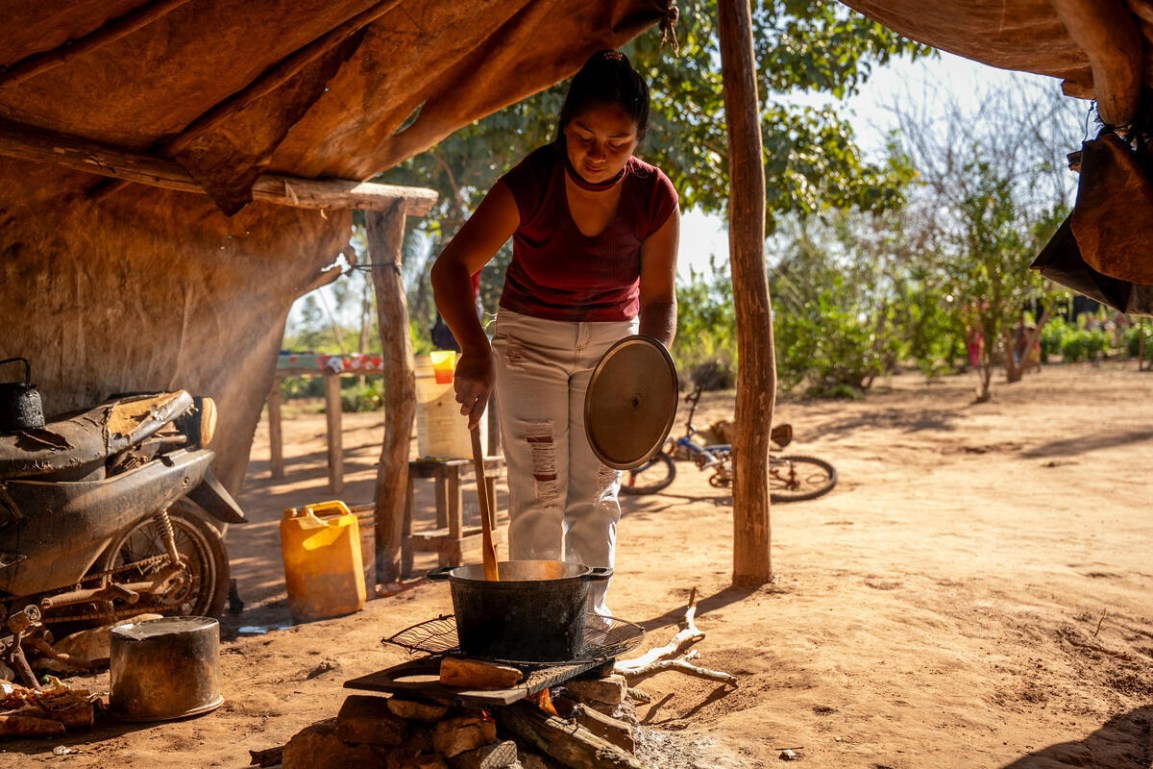
(Photo by FAO/Cristian Palacios Felte)
 Maximo Torero