It’s still too soon to celebrate, but there’s a glimmer of good news on the horizon — the post-pandemic hike in food prices appears to be easing. While this could bring welcome relief, wages across much of the world are still not keeping up with food inflation. What’s more, tariffs will only add to this uncertainty.
The full-blown food crisis predicted during the heights of the pandemic never materialized. It shows the global agrifood system — the farm-to-fork interconnected network that produces, processes, distributes and consumes food — has built up some resilience to survive global shocks like pandemics, wars and wild swings in economic policy. The past five years provides solid evidence of what worked, as well as what didn’t.
In 2020 and 2021, food prices surged as lockdowns disrupted supply chains and drove up shipping costs. Then the war in Ukraine sent food, fuel, and fertilizer prices soaring. At the start of the pandemic, developed countries rolled out massive stimulus to avoid a recession, then later reversed course with steep interest rate hikes to contain the inflation that followed.
This, in turn, made it harder for countries relying on food imports to buy food and fertilizer because their currencies weakened against the dollar.
In Lebanon, food inflation neared a whopping 8,000% from 2022 to 2023 due to devaluation of local currency and rising global wheat prices. This intensified instability and emigration. Even as food prices have returned to pre-pandemic levels, one fifth of the population still lack food. In Japan, skyrocketing rice prices forced an agriculture minister out of office.
In the U.K., food prices rose by more than 19% between 2022 and 2023, the highest rise in over four decades. This left 7.5 million people, or 11% of the population, struggling to afford enough food. In America, prices surged nearly 24% from 2020 to 2024, with staples like ground beef now costing $6 a pound, up from $4 in 2000. Today 47 million Americans face hunger, straining food banks.
Nowhere has hunger worsened than in sub-Saharan Africa, where most countries import food to feed their populations. For the many who survive on $2.15 a day, even a little bump in prices means starving. Nigerians saw the price of 1 kg of rice shoot up by 73% from 2022 to 2023. In desperation, people resorted to “throw-away” rice typically used for feed. A wide civil unrest followed. In Africa’s most populous country of 236 million, 20% of the population — or more than 47 million Nigerians — are undernourished.
Global supply chains are the lifeline for food. And the answer to averting food shortages or inflation is not erecting trade barriers. During the 2007–2008 global food crisis, major food-producing countries like Argentina, Kazakhstan and Russia banned wheat exports, while China and India restricted rice exports. These restrictions were meant to protect domestic supply but instead triggered a global price surge.
Countries tend to throw up trade barriers when they don’t know what to expect. When Covid-19 hit, governments had better information on global stock levels, harvest and market conditions than they had back in 2007–2008. As a result, only a handful of major exporting nations put up temporary restrictions, which didn’t affect trade flows.
Many countries also deployed generous relief packages, softening the blow of price hikes during the pandemic. The U.S. expanded food aid and child tax credits, which led to a record decline in poverty — averting a hunger crisis. Latin American countries activated nearly 300 social protection programs. These interventions helped ease the worst effects of hunger.
When shocks hit, the first job of policymakers is to shield their most vulnerable populations. They can do this by making essential food items tax-exempt and expanding food aid programs. Such programs should be targeted and time-bound. Contrary to common belief, hunger is more widespread in urban areas than in rural areas, because in cities, people can’t grow their own food and must spend a larger share of their income on it. That helps explain the popularity of proposals like a New York City mayoral candidate’s to establish public supermarkets in cities to curb spiraling food prices.
The Covid-era food inflation proved that reducing uncertainty is essential to effective trade policy. Timely data on food stocks, production availability and logistical issues provide clarity and deter nations from pursuing nationalistic policies. Tools like the UN’s agricultural market information system enables countries to monitor supplies, improving transparency in global food markets. Such solutions need to be scaled.
The best way governments can lower food prices sustainably is to invest in their agrifood systems. Advancing agricultural R&D, transport infrastructure and storage would address vulnerabilities from production to distribution, while also creating jobs, thereby improving people’s ability to afford food.
When supply chains are strong, prices are less volatile.
Of course, these policy recommendations must be adapted to each country’s circumstances. For many nations heavily dependent on food import, domestic policies alone cannot stabilize prices. They should seek more external support and leverage partnerships. Nor should self-sufficiency be a goal. Rather than protecting domestic consumers, tariffs could shrink agricultural trade and add volatility to the global food system. Food security is better achieved through open trade and investment in food systems.
Even with easing food prices, the world is not out of the woods. And global market integration leaves every country vulnerable to shocks, like trade wars. Luckily, we know what works — let’s not risk losing the gains.
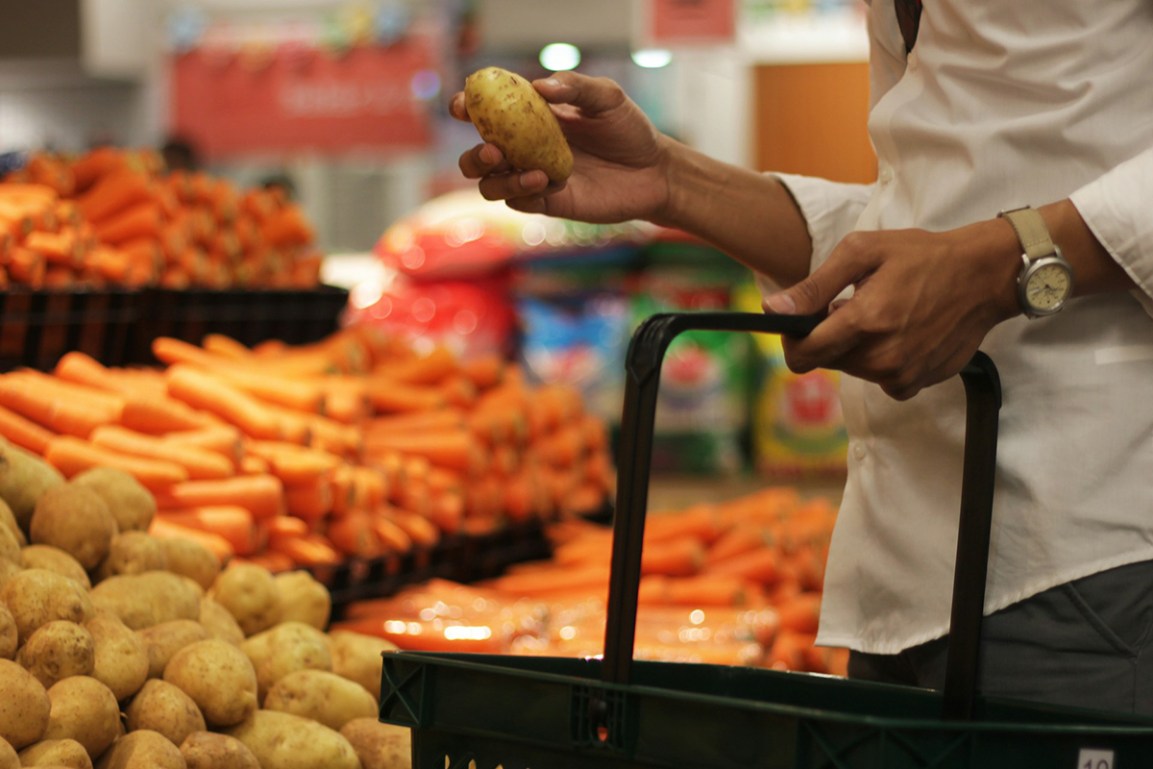
(Photo by Viki Mohamad on Unsplash)
 Maximo Torero