In a region where hunger loomed large for generations—from the debt crises of the 1980s to the volatility of the 1990s to the recent onslaught of COVID-19—unexpected and powerful news is emerging today: Latin America and the Caribbean are gaining ground in the global fight against hunger.
After years of fragile and unstable progress, the region is showing a clear and sustained trend for the first time in more than a decade: undernourishment has fallen from 7% in 2021 to 6.2% in 2023, according to the most recent report on The State of Food Security and Nutrition in the World 2024 by FAO and its partner agencies. This means that 4.3 million people are no longer suffering from hunger, and more than 37 million have overcome moderate or severe food insecurity. For the first time, Latin America and the Caribbean are below the world average in this indicator.
This outcome is no coincidence. It is the fruit of courageous decisions, innovative public policies, and strong regional cooperation. The region is demonstrating that, with political will, social investment, and a vision for the future, hunger is not inevitable. It is a choice.
During the pandemic, Latin American countries put their capacities to the test: more than 460 social protection measures were activated to contain the impact of the economic collapse. Sixty percent of the region’s population received some form of assistance, from cash transfers to direct food distribution. And when inflation hit commodity prices hard, many governments reactivated these safety nets. Latin America not only resisted: it learned, adapted, and protected.
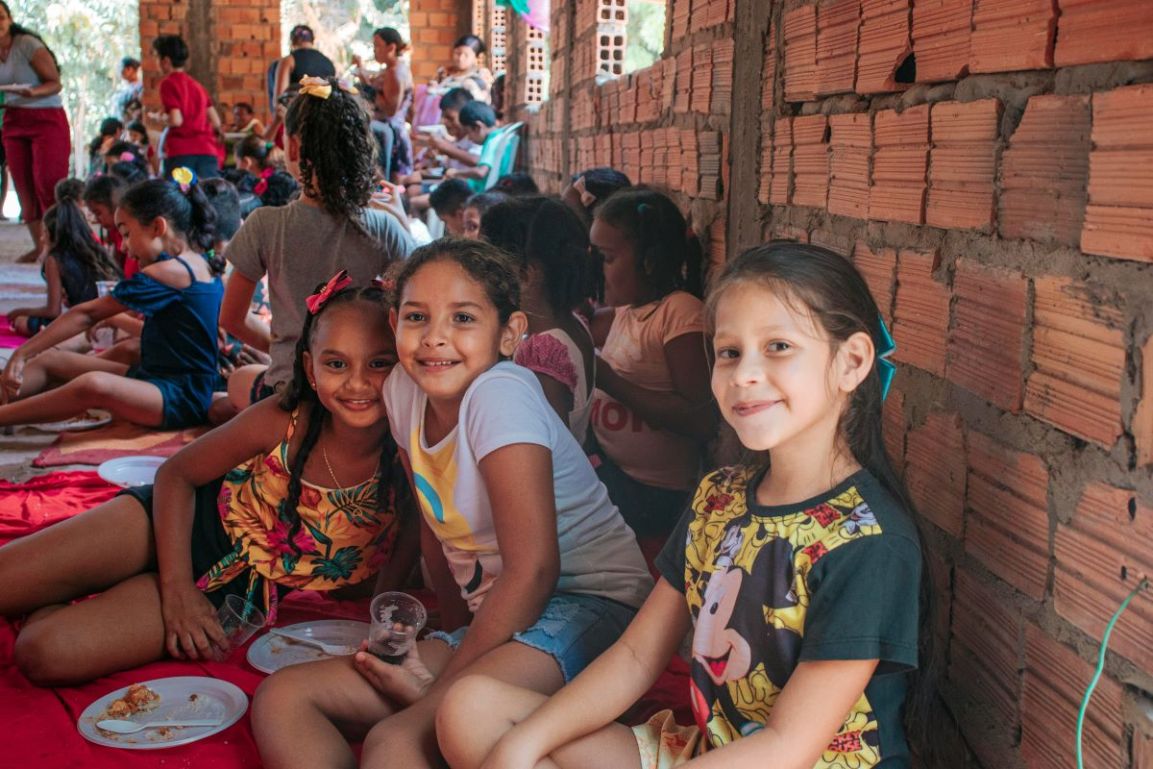
One of the emblems of this transformation is the School Feeding Programs. More than 80 million children receive meals in their schools thanks to a policy that unites nutrition, education, and rural development. Through the Sustainable School Feeding Network (RAES), promoted by FAO and Brazil, more than 23,000 schools have been transformed into spaces of food security. More than 9,000 family farmers have been integrated into public procurement, strengthening local economies. This is not just social policy: it is smart economic policy.
Initiatives like Mano de la Mano also demonstrate a new way of thinking about development: identifying territories with agricultural potential but trapped in poverty, and building public-private investments to unleash that potential. It’s a commitment to leaving no one, no territory, behind.
Of course, challenges persist. The Caribbean continues to show high levels of undernourishment. Women and rural populations face persistent inequalities. But this time the region isn’t reacting: it’s anticipating, planning, and executing. It’s leading.
And it is not alone. The G20 Global Alliance against Hunger and Poverty, led by Brazil with technical support from the FAO, offers a platform to bring these regional solutions to the world. Latin America is no longer just a recipient of aid: it is a generator of global solutions.
On a planet with sufficient resources to feed all its inhabitants, hunger is a constructed tragedy. Latin America and the Caribbean are demonstrating that it is possible to dismantle it.
Today, the world’s most unequal region is teaching one of its most powerful lessons: with determination, innovation, and cooperation, Zero Hunger by 2030 is not a utopia. It’s an achievable commitment. It’s a future that has already begun.
This piece originally appeared on Prensa Libre on July 12, 2025.
(Photo Credit: Carlos Magno on Unsplash)
 Maximo Torero